Hiring
Drug Testing
Employment Screening
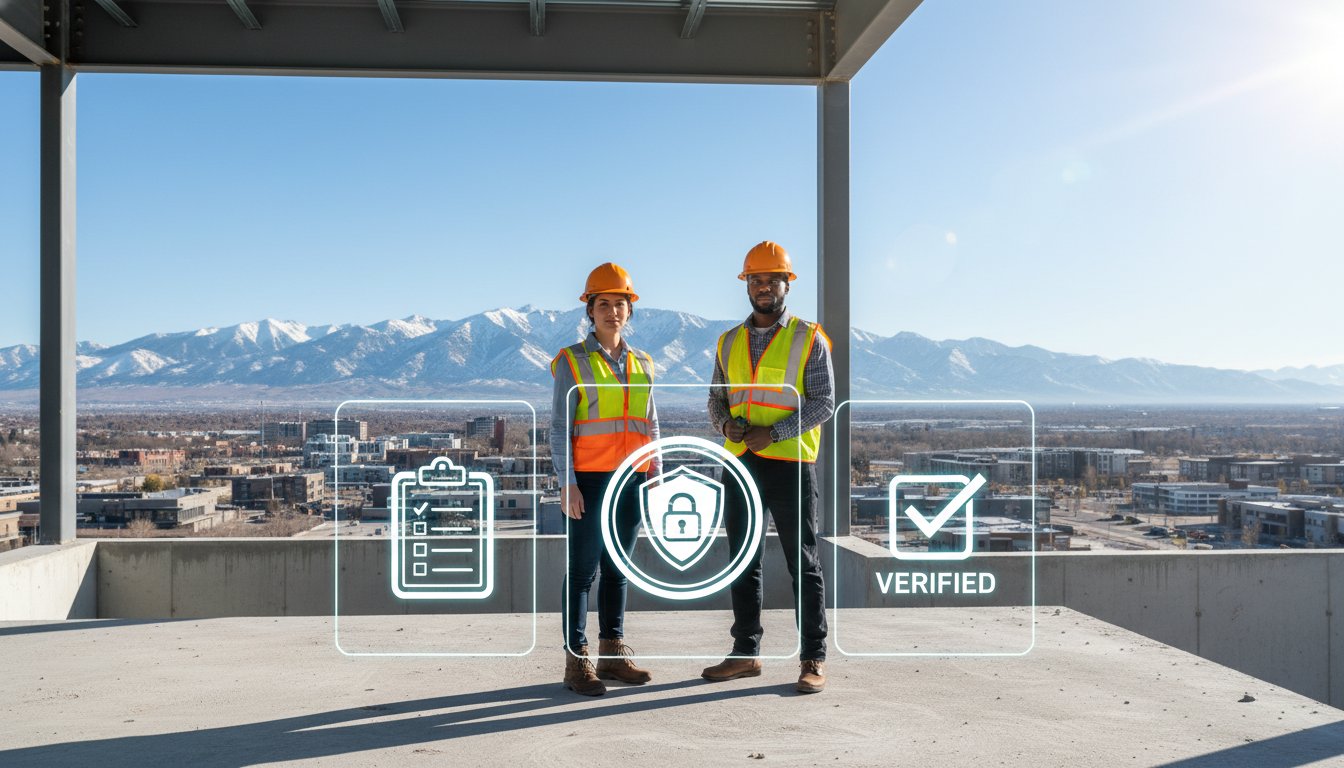

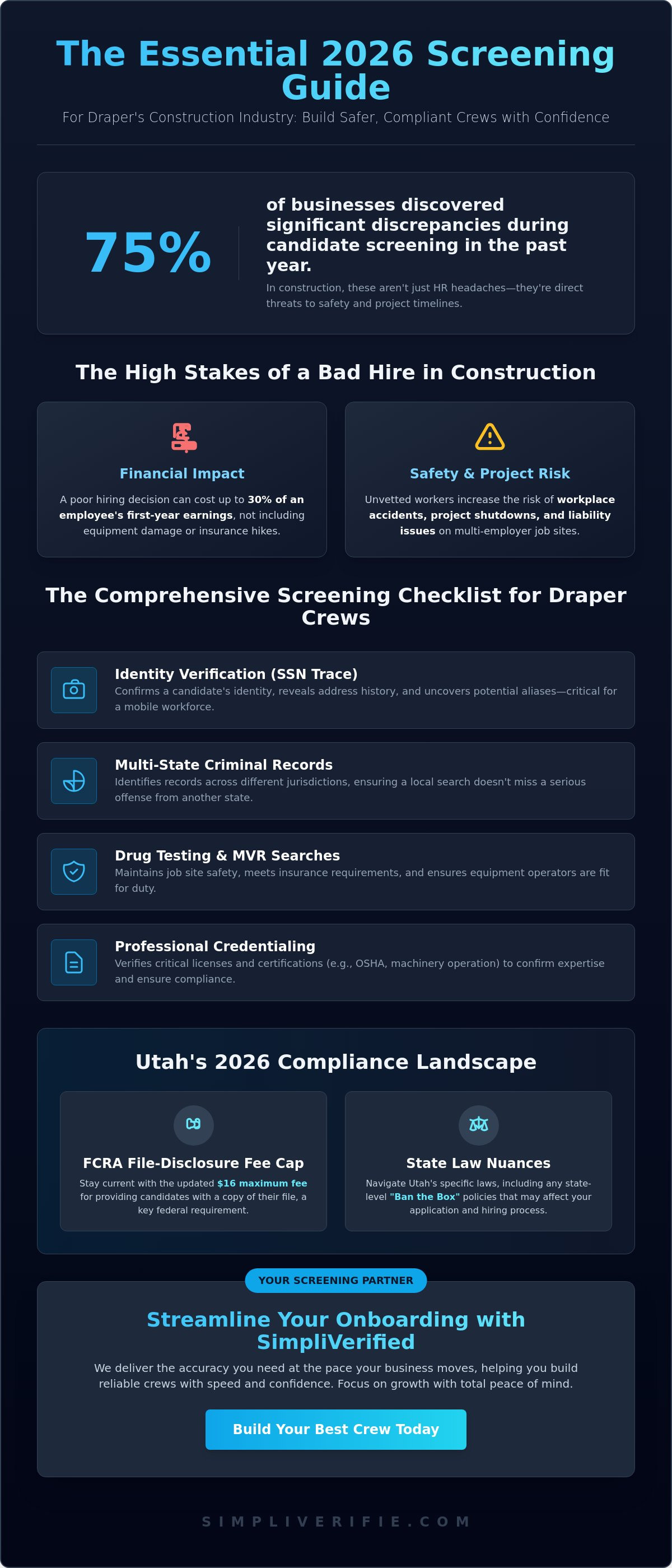
Did you know that 75% of businesses discovered significant discrepancies during candidate screening in the past year? In a high-stakes environment like a Draper job site, those hidden details aren't just HR headaches; they're direct threats to your team's safety and your company's bottom line. Effective screening for construction industry workers Draper requires more than a quick handshake. It demands a precise, localized approach to compliance that keeps pace with 2026 standards.
We understand that recruiting for the trades is a race against time. It's easy to feel overwhelmed by shifting Utah drug testing laws and the constant pressure to get reliable crews on-site immediately. This guide provides a definitive checklist to help you mitigate risk and maintain compliance without slowing down your operations. We'll explore the latest state-level requirements, including mandatory drug policies for state contracts and the updated $16 FCRA file-disclosure fee cap. You'll gain a clear framework to ensure your hiring process remains efficient, allowing SimpliVerified to help you focus on growth with total peace of mind.
Draper's skyline is shifting rapidly in 2026. This growth brings a massive demand for labor that puts pressure on every project manager in the region. When you need boots on the ground by Monday, it's tempting to cut corners on vetting. However, the cost of a bad hire is steep. The U.S. Department of Labor estimates that a poor hiring decision can cost a company up to 30% of that employee's first-year earnings. On a construction site, this figure doesn't even account for the secondary costs of equipment damage, insurance hikes, or project shutdowns. A single oversight can derail a multi-million dollar contract.
Traditional background checks often fail to protect multi-employer sites. Workers in the trades are mobile; they move between states and projects frequently. A simple local search might miss a serious record from a neighboring state. Effective screening for construction industry workers Draper means using a comprehensive screening checklist that includes multi-state criminal records and identity validation. SimpliVerified helps you maintain this high standard without sacrificing the speed your project timeline demands. Our team understands that in construction, a two-week wait for a report is a non-starter. We provide the accuracy you need at the pace your business moves.
Utah's labor market is currently defined by a high volume of contract and temporary workers. The "gig economy" has firmly established itself in the local trades, leading to a workforce that is more transient than ever. This creates a unique challenge for site safety. You're often managing crews where many members are new to your company's culture and safety protocols. Rapid screening is the only way to meet aggressive deadlines while maintaining a secure environment. We focus on providing the clarity you need to make fast, informed decisions about who enters your job site, reducing the risk of workplace accidents before they happen.
Different roles require different levels of scrutiny. While every worker needs basic criminal background checks, specialized positions demand deeper verification. Site supervisors hold the keys to your liability and must be vetted thoroughly. Skilled trades like electricians and plumbers must have their credentials confirmed through professional license verification. This step ensures that the people performing technical work are legally authorized and possess the necessary expertise. By tailoring your screening for construction industry workers Draper to the specific risks of each role, you build a more resilient organization. You can explore our construction-specific solutions to see how we help firms manage these varying risk levels with ease.
Building a reliable crew starts with a clear, repeatable process. In the fast-moving Draper market, you need a checklist that covers more than just the basics. A thorough vetting process ensures that the person operating heavy machinery or entering a residential site is exactly who they claim to be. This protects your reputation and keeps your insurance premiums manageable. Effective screening for construction industry workers Draper requires a layered approach that accounts for the unique mobility of the trades.
Use the following checklist to ensure your onboarding process meets 2026 standards:
Every check should begin with a Social Security Number (SSN) Trace. This tool doesn't just verify identity; it reveals a candidate’s address history and any alias names they've used. For a workforce that often moves between states, this is the only way to ensure you aren't missing records from previous locations. While national databases provide a broad overview, they often lack the real-time accuracy of local county records. We recommend supplementing national searches with targeted county-level checks to catch recent filings. Multi-jurisdictional searches are indispensable for interstate workers, providing a layered defense against potential safety risks. Staying FCRA and State-Law Ready is a continuous process that begins with these foundational steps.
Experience isn't just a line on a resume; it's a safety requirement. Validating employment verification helps reduce on-the-job training accidents by confirming that a worker has the hands-on experience they claim. This is especially vital when hiring for specialized machinery operation or site supervision roles. For seasonal workers with employment gaps, look for a consistent history of returning to the same contractors or maintaining certifications during off-peak months. Don't forget to confirm specialized certifications like OSHA 10 or OSHA 30. These credentials prove a commitment to safety that entry-level staff may not yet have. Proper screening for construction industry workers Draper includes these deeper dives into a candidate’s professional past. Establishing this framework helps you scale your operations without taking on unnecessary liability. If you're looking to simplify this process, you can explore our construction-specific screening services to see how we handle the heavy lifting for you.
Safety on a construction site is the foundation of a productive workplace. Prioritizing Job Site Safety requires proactive measures to address substance abuse, which remains a common risk factor in the trades. For firms conducting screening for construction industry workers Draper, drug testing isn't just an HR hurdle. It's a cornerstone of insurance compliance and site security. By implementing a consistent program, you create a culture where safety is the priority from day one.
Your safety framework should also include clear protocols for post-accident and reasonable suspicion testing. These tools provide a structured response when incidents occur, protecting the company from liability and keeping the rest of the crew safe. Utilizing local Draper collection sites speeds up the process significantly. Faster turnaround times mean you spend less time waiting for results and more time moving the project forward. SimpliVerified coordinates these logistics to ensure a friction-free experience for your candidates and your management team.
Different roles on the job site carry different levels of risk. While a standard 5-panel test covers the most common substances, many contractors opt for a 10-panel test for safety-sensitive roles. This broader panel provides more comprehensive protection for your team. Even with 2026 updates to marijuana legislation, Utah employers retain the right to maintain a drug-free workplace. You should refer to a pre employment drug test guide to ensure your policy aligns with Utah's voluntary drug testing law. This statute offers specific legal protections to companies that follow state-mandated testing procedures, especially for those working on state construction contracts where random testing is required for crews of 10 or more.
Driving history serves as a reliable predictor of general on-site safety behavior. Motor Vehicle Records (MVR) are essential for anyone operating company vehicles or heavy machinery. A person's performance on the road often mirrors their attention to detail on the job site. A one-time check during onboarding isn't enough for active drivers; regular monitoring is necessary to catch new infractions. Integrating MVR results into your corporate safety policy allows you to set clear standards for who is allowed to operate equipment. This proactive stance helps lower your insurance risks and prevents accidents before they happen. You can explore our specialized solutions for the construction industry to see how we help firms manage these critical safety records.
Utah's legal environment for hiring requires a precise touch. While Utah remains an at-will employment state, federal and state regulations still dictate exactly how you must handle candidate data. For those managing screening for construction industry workers Draper, compliance isn't optional. It's the shield that protects your firm from litigation and federal fines. The Fair Credit Reporting Act (FCRA) governs how you use background checks. As of January 1, 2026, the maximum fee for a file disclosure under the FCRA increased to $16. Staying aware of these micro-adjustments is what separates a prepared HR team from one at risk.
Utah’s "Ban the Box" laws primarily affect public employers. Private firms in Draper should still be mindful of how they inquire about criminal history to avoid claims of bias. Best practices suggest waiting until after an initial interview or a conditional offer to discuss past records. This ensures your process remains fair and defensible. Working with an accredited screening partner like SimpliVerified ensures that your workflows are built on these legal foundations from the start. An accredited partner doesn't just provide data; they provide a defensible process that stands up to scrutiny.
If a background check reveals information that makes you hesitate, you can't just move to the next candidate. You must follow a specific roadmap to remain compliant. This process protects the applicant's rights and your company's reputation.
Construction sites are busy, but your data management shouldn't be messy. Sensitive background check results must be stored securely. Ideally, use encrypted digital formats rather than paper files kept in a job site trailer. Maintaining a digital audit trail for every hiring decision is vital for defending your practices during a potential audit. If your firm handles medical-adjacent projects, such as hospital expansions or clinic renovations, you may also need to consider healthcare compliance monitoring to meet stricter facility standards. This level of oversight ensures that your crew meets the specific safety requirements of sensitive environments. By centralizing this data, you reduce the risk of unauthorized access and ensure long-term compliance.
Ready to secure your hiring process? Partner with SimpliVerified today to ensure every hire is backed by expert compliance and local expertise.
Managing a complex project requires a high level of coordination. You shouldn't have to spend your day chasing down missing reports or juggling multiple vendors. SimpliVerified offers a seamless way to handle screening for construction industry workers Draper, acting as a strategic partner rather than just a service provider. We've built our platform to address the specific pains of the trades, from high turnover rates to the urgent need for site safety. By centralizing your vetting process, you gain the clarity needed to keep your projects on schedule and your sites secure.
Our technology integrates directly with construction-specific staffing platforms. This connection removes the friction from your daily workflow and allows for faster communication between your hiring team and our experts. You get real-time updates on background checks and drug testing results, ensuring that no candidate sits in limbo while a project deadline looms. We focus on providing the "SimpliVerified Advantage," which is the perfect balance of technology-driven speed and human-verified accuracy. This approach ensures you aren't just hiring fast, but you're also hiring the right people for your crew.
Being headquartered right here in Draper gives us a distinct advantage. We understand the specific nuances of Salt Lake County courts and the local regulatory trends that impact Utah contractors. You won't have to explain the local market to us; we live in it. This proximity allows for direct access to support when you have questions about a specific report or a complex compliance issue. While our heart is local, our reach is national. We leverage a nationwide network of 15,000 collection sites to ensure your candidates never have to travel far for a drug screen. This is especially helpful for firms that bring in specialized talent from out of state to meet the 2026 labor demand.
Building a safer job site is a continuous effort that goes beyond the initial hire. For firms with high-volume needs, we offer customized screening packages for the construction industry that scale with your growth. These packages can include everything from initial criminal checks to ongoing monitoring of professional licenses and motor vehicle records. Setting up recurring monitoring is a smart way to ensure long-term project safety and maintain your insurance standing throughout the year. You don't have to navigate these complexities alone. Our team is ready to help you build a hiring framework that is as sturdy as the structures you build. Contact SimpliVerified today for a Draper-specific screening consultation and discover how we can simplify your onboarding process.
Success in Draper’s 2026 construction boom depends on your ability to scale quickly without compromising on safety. Rigorous screening for construction industry workers Draper isn't just a regulatory box to check; it’s a strategic investment in your project’s longevity. By prioritizing identity verification, drug testing, and MVR monitoring, you protect your crew from avoidable accidents and your firm from costly liability. A structured approach to compliance ensures that every worker on your site meets the high standards your clients expect.
SimpliVerified is here to simplify this complexity. As a partner headquartered in Draper, UT, we provide localized expertise backed by FCRA compliant processes and a network of over 15,000 nationwide drug testing sites. We help you bridge the gap between rapid onboarding and thorough vetting, giving you the confidence to focus on building. Don't let hiring bottlenecks slow your momentum. Secure Your Job Site with SimpliVerified Construction Screening and move your projects forward with total peace of mind. We're ready to help you build a more reliable workforce today.
A standard package for screening for construction industry workers Draper typically includes a Social Security Number trace, multi-state criminal record searches, and sex offender registry checks. Many firms also include drug testing and Motor Vehicle Records (MVR) for employees operating heavy machinery. This layered approach ensures that every crew member meets both safety and identity standards before arriving on the job site.
Most background checks are completed within one to three business days, though some specialized verifications might take slightly longer. At SimpliVerified, we prioritize fast turnaround times because we know that project deadlines don't wait. Our streamlined technology helps you move from the initial request to a final hiring decision quickly, keeping your project on schedule without sacrificing accuracy.
Yes, Utah employers can legally test for marijuana and maintain a drug-free workplace. Under the state’s voluntary drug testing law, companies receive specific legal protections when they follow mandated testing protocols. Additionally, as of October 14, 2025, contractors on state-funded projects must maintain a drug and alcohol testing policy for all safety-sensitive positions to ensure total job site safety.
OSHA does not have a specific regulation mandating background checks for all workers, but they do require employers to provide a safe workplace under the General Duty Clause. Implementing a comprehensive screening for construction industry workers Draper helps you fulfill this obligation by identifying potential safety risks before they enter the site. Proper vetting is a proactive way to reduce the likelihood of workplace accidents.
Most criminal background checks cover a seven-year history, which is the standard look-back period under the Fair Credit Reporting Act (FCRA) for many types of reported information. Some records may be available for a longer duration depending on the specific search and the nature of the offense. We provide accurate reports that help you evaluate a candidate’s history while staying compliant with federal and state reporting limits.
You should screen temporary and seasonal workers with the same rigor as permanent hires. A worker’s tenure doesn't change the safety risks they might pose on a job site or the liability your company carries. Vetting all staff ensures that your entire crew remains reliable and that your safety culture isn't compromised by a short-term hire who hasn't been properly vetted.
SimpliVerified maintains FCRA compliance by using accredited processes and providing built-in tools for the adverse action process. We stay current on all regulatory changes, such as the January 2026 update that increased the FCRA file-disclosure fee cap to $16. Our platform guides you through the necessary legal steps, ensuring that your hiring decisions are defensible and that candidate rights are always respected.
Having a criminal record doesn't automatically disqualify a candidate; instead, you should perform an individualized assessment. Consider the nature of the offense, how much time has passed, and how the record relates to the specific duties of the construction role. This balanced approach helps you find reliable talent while maintaining a safe environment and adhering to fair hiring practices in the Utah market.