Hiring
Drug Testing
Employment Screening

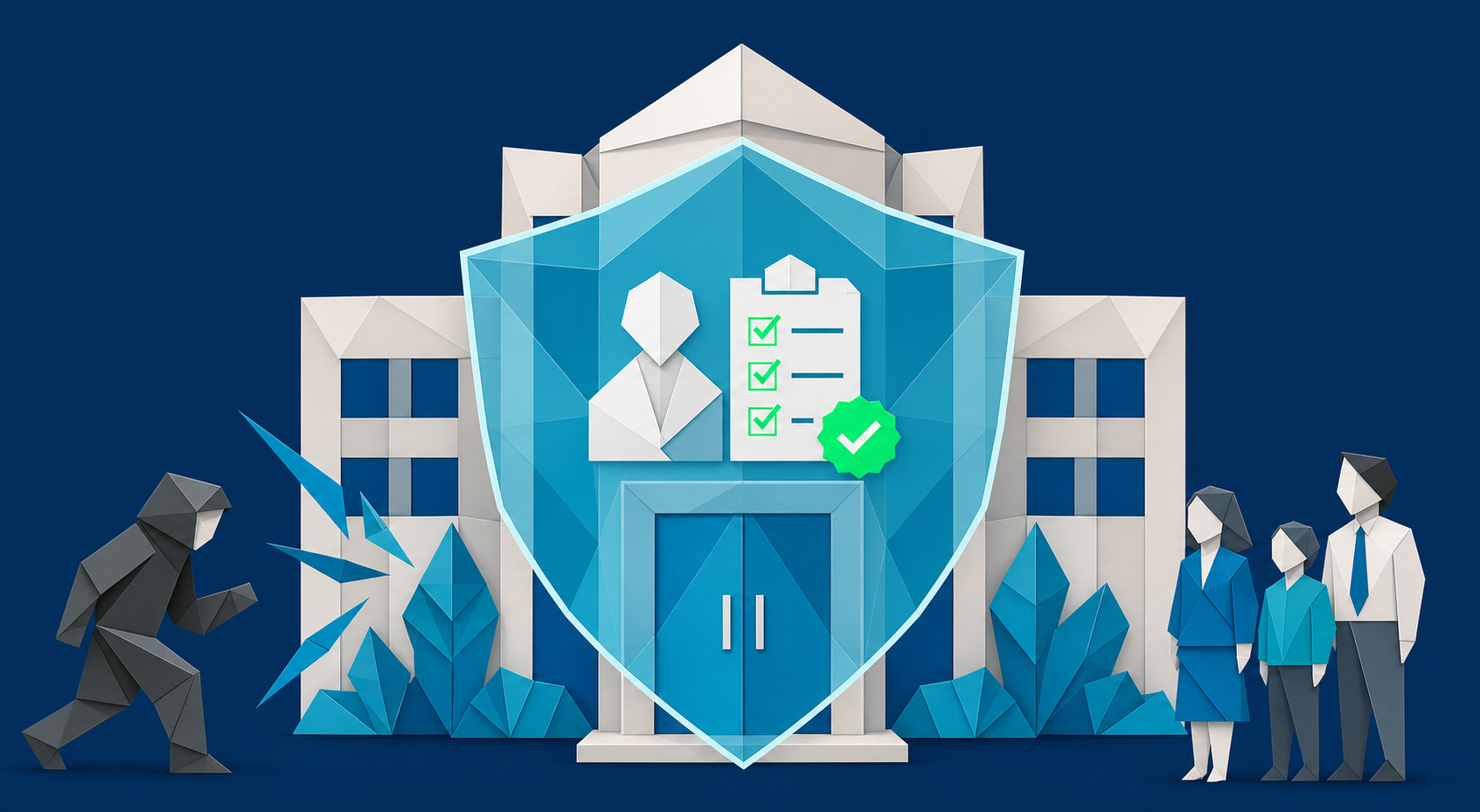
What if 36% of job applicants have lied about their educational credentials on their resume? According to the 2023 Employment Screening Benchmark Report, this staggering statistic represents millions of unqualified candidates slipping through traditional hiring processes. When you need to validate degrees and diplomas, those endless phone calls to unresponsive registrar offices and confusing international credential evaluations can leave your organization vulnerable to costly hiring mistakes.
You're right to feel concerned about credential fraud. The rise of diploma mills and sophisticated document forgery has made manual verification processes both time-consuming and unreliable. Every unverified hire puts your company's reputation, compliance status, and team integrity at risk.
This comprehensive guide will show you exactly how to authenticate academic credentials efficiently while maintaining full FCRA compliance. You'll discover automated verification methods that eliminate guesswork, streamline international degree validation, and provide the peace of mind that every team member truly earned their qualifications.
We'll cover the complete verification process, from identifying red flags in applications to implementing technology solutions that deliver results in hours, not weeks.
Education verification is the process of confirming academic credentials directly with the issuing institution, going beyond simple diploma checks to ensure authenticity. In 2026, this practice has become essential as credential inflation reaches unprecedented levels, with 78% of job postings now requiring bachelor's degrees for positions that didn't previously demand them, according to Harvard Business School research.
The distinction between a basic diploma check and primary source verification matters significantly. A diploma check might involve reviewing a candidate's submitted documents, while primary source verification requires direct contact with the educational institution to confirm enrollment dates, graduation status, and degree details. This thorough approach protects employers from sophisticated forgeries that can fool even experienced HR professionals.
Negligent hiring lawsuits cost companies an average of $1.2 million per incident when unverified credentials lead to workplace incidents or professional misconduct. When organizations fail to validate degrees and diplomas properly, they face corporate liability that extends beyond immediate financial losses to include damaged reputation and regulatory scrutiny.
To further address these vulnerabilities through professional oversight, Palisade International LLC provides expert security and private investigation services that help businesses mitigate high-level corporate risks.
The proliferation of diploma mills has created a complex verification landscape where fraudulent institutions operate with convincing facades of legitimacy. These operations often claim accreditation from organizations that sound official but lack recognition from the U.S. Department of Education. AI-powered design tools now enable candidates to create transcripts and diplomas that are virtually indistinguishable from authentic documents, complete with watermarks and official seals.
Verifying an institution's standing with the Department of Education database has become a critical first step. Legitimate accreditation agencies are listed in the federal database, while diploma mills typically reference non-existent or unrecognized accrediting bodies.
Resume fraud statistics reveal that 32% of candidates misrepresent their educational background, with 18% fabricating degrees entirely, according to the 2023 Employment Screening Benchmark Report. Professional liability insurance policies in healthcare, finance, and engineering often contain clauses that void coverage when employees lack verified credentials required for their positions.
The "fake it till you make it" culture has created workplace safety risks, particularly in technical fields where unqualified individuals may lack essential knowledge for critical decisions. This trend transforms education verification from an administrative task into a fundamental risk management strategy that protects both company assets and employee safety.
The journey to validate degrees and diplomas begins with candidate consent and ends with a comprehensive verification report. This process typically unfolds across three distinct phases: initial data collection, institutional contact, and final verification documentation.
Two primary methodologies dominate the verification landscape. Manual outreach involves direct communication with registrar offices, requiring 3-5 business days for completion but delivering 98% accuracy rates. Automated database solutions query centralized repositories like the National Student Clearinghouse, which maintains records for over 3,600 participating institutions and processes 1.2 billion verification requests annually.
The National Student Clearinghouse serves as the backbone for automated verification in the United States. This nonprofit organization partners with 97% of public and private institutions, enabling instant verification for degrees earned since 1993. However, older credentials and international degrees still require manual verification through direct institutional contact.
Essential data points include exact dates of attendance, specific degree earned, major field of study, and graduation status. Verification specialists also confirm the institution's accreditation status and legal authority to grant degrees. Missing or inconsistent information triggers additional investigation protocols.
Direct registrar contact eliminates candidate manipulation risks. Unlike accepting PDF transcripts or diploma images, primary source verification establishes a closed-loop communication channel between the verification provider and the educational institution. This method prevents candidates from intercepting or altering documentation during the verification process.
Defunct or merged colleges present unique challenges. When institutions close or consolidate, their records transfer to state education departments or successor institutions. Verification specialists maintain databases tracking these institutional changes, ensuring accurate verification even for schools that ceased operations decades ago.
Regional accreditation represents the highest standard in American higher education, covering institutions like Harvard, Stanford, and state university systems. National accreditation typically applies to vocational schools and specialized institutions. The U.S. Department of Education accreditation database serves as the definitive resource for confirming institutional legitimacy.
Unaccredited institutions cannot participate in federal financial aid programs, and their degrees may lack legal recognition for employment purposes. Red flags include institutions with names mimicking prestigious universities, addresses in residential areas, or claims of "life experience" degrees.
Professional verification services streamline this complex process, transforming what could take weeks of internal research into a matter of days. When accuracy and efficiency matter for your hiring decisions, automated verification solutions provide the thoroughness and speed modern businesses require.
When Draper companies choose to validate degrees and diplomas in-house, they often underestimate the true cost and complexity involved. What appears to be a simple phone call to a registrar's office quickly becomes a time-consuming process that diverts valuable HR resources from core recruitment activities.
The average in-house education verification takes 45 minutes of active staff time when you factor in research, phone calls, follow-ups, and documentation. This doesn't include the 24-72 hour waiting periods for callbacks or email responses from busy university registrars. For a company hiring 50 employees annually, that's nearly 40 hours of HR staff time dedicated solely to education checks.
Professional screening services eliminate these inefficiencies by maintaining direct relationships with thousands of educational institutions worldwide. They can verify the accreditation status of educational institutions instantly and process multiple verifications simultaneously, reducing turnaround times from days to hours.
Manual verification processes carry significant opportunity costs. While an HR specialist spends time on hold with university registrars, they're not conducting interviews, building talent pipelines, or developing retention strategies. The Society for Human Resource Management reports that companies lose an average of $4,129 per hire when verification delays extend the hiring timeline by just one week.
Manual processes also increase error rates. Inconsistent data entry, misheard information during phone calls, and varying verification procedures across different institutions create compliance risks. A single missed red flag in education credentials can expose companies to negligent hiring lawsuits, particularly in regulated industries where specific qualifications are mandatory.
International degree verification presents unique challenges that most HR teams aren't equipped to handle efficiently. Language barriers, time zone differences, and varying educational systems across countries complicate the process significantly. European universities operating under GDPR restrictions may refuse to provide information to unauthorized third parties, while institutions in Asia often require specific documentation formats.
The apostille process, required for authenticating documents from Hague Convention countries, adds another layer of complexity. Professional services navigate these requirements seamlessly, maintaining compliance with international privacy laws while ensuring thorough validation. They understand when apostilles are legally necessary versus when alternative verification methods suffice, preventing unnecessary delays and costs.
Encrypted third-party platforms also provide superior security for sensitive academic records. Unlike email exchanges or phone conversations, professional screening services use secure portals that protect both candidate privacy and institutional data, reducing liability for all parties involved in the verification process.
Building an effective education verification policy requires careful attention to legal compliance and operational efficiency. Organizations must validate degrees and diplomas through structured processes that protect both employer interests and candidate rights.
Start by obtaining written consent under the Fair Credit Reporting Act (FCRA). This isn't optional paperwork. Federal law mandates explicit authorization before conducting background checks, including education verification. The disclosure must be standalone, separate from employment applications or other documents.
Define which positions require mandatory education checks. Healthcare roles demand rigorous verification due to patient safety concerns. Financial positions need scrutiny because of regulatory requirements. Technical roles often require specific certifications that directly impact job performance. Document these requirements clearly in job descriptions and hiring protocols.
When discrepancies surface during verification, establish a clear response framework. Contact the candidate immediately to discuss findings. Allow 48-72 hours for explanation or additional documentation. Common issues include name changes, transferred credits, or institutional mergers. Don't assume fraud without investigation.
The Adverse Action process protects candidates when verification fails. Provide pre-adverse action notice with specific reasons for potential rejection. Include a copy of the background report and consumer rights summary. Wait five business days before final decision. This cooling-off period allows candidates to dispute inaccurate information or provide clarification.
Your disclosure form must use specific language: "A background investigation may be obtained on you for employment purposes. This investigation may include education verification." The authorization should state: "I authorize [Company Name] to obtain background information for employment consideration." Digital signatures require audit trails and timestamp verification to meet 2026 compliance standards.
Trigger verification after interviews but before final offers. This timing prevents wasted resources on unqualified candidates while avoiding premature elimination of strong prospects. Link results directly to your Applicant Tracking System for streamlined decision-making. Combine education checks with employment verification to build comprehensive candidate profiles that validate degrees and diplomas alongside work history.
Ready to streamline your verification process? Implement automated education verification that ensures compliance while reducing administrative burden on your hiring team.
SimpliVerified transforms how Draper businesses approach credential verification through cutting-edge technology and streamlined processes. Our platform eliminates the traditional friction points that slow down hiring decisions, enabling companies to validate degrees and diplomas with unprecedented speed and accuracy.
The "Per-Verification" pricing model delivers immediate cost savings for organizations of all sizes. Unlike subscription-based competitors that charge monthly fees regardless of usage, you pay only for completed verifications. This approach has helped small Draper startups reduce screening costs by up to 40% while enabling large enterprises to scale their hiring without budget constraints.
Our Utah-based support team brings specialized expertise in US education standards and local hiring practices. Located right here in the state, these professionals understand the unique challenges facing Draper employers and provide personalized guidance throughout the verification process. Response times average under 2 hours during business hours, ensuring your hiring timeline stays on track.
Enterprise-grade integrations connect seamlessly with popular hiring platforms including Workday, BambooHR, and Greenhouse. These automated connections eliminate manual data entry and reduce processing time from days to hours.
The Simpli interface simplifies credential verification into three clicks: upload candidate information, select verification type, and submit. Real-time status updates flow directly to your dashboard, eliminating follow-up calls and emails. Our nationwide network of institutional partnerships ensures 72-hour turnaround times even for smaller colleges and trade schools.
Smart bundling options let you combine education verification with specialized screening services. Medical facilities can add healthcare compliance monitoring for clinical staff, while organizations working with community partners benefit from comprehensive volunteer screening packages.
The SimpliVerified Advantage centers on three core principles: Accuracy through direct institutional verification, Compliance with FCRA and state regulations, and Speed via automated processing. This combination ensures you can validate degrees and diplomas while maintaining the highest standards of due diligence, giving your Draper organization complete peace of mind in every hiring decision.
The landscape of education verification has shifted dramatically as remote work and digital credentials become standard. Employers who validate degrees and diplomas through systematic verification processes reduce hiring risks by 73% according to recent industry data. The choice between DIY verification and professional screening services ultimately depends on your company's volume, resources, and compliance requirements.
Implementing a structured verification policy protects your organization from costly mis-hires while ensuring FCRA compliance. Companies that integrate automated verification systems report 40% faster time-to-hire and significantly improved candidate experience scores.
Your hiring process deserves the reliability and efficiency that modern verification technology provides. SimpliVerified's platform delivers FCRA-compliant reporting with seamless integration across top ATS platforms, backed by expert Utah-based support that understands your verification challenges.
Ready to streamline your education verification process? Get started with fast, compliant education verification today and transform your hiring workflow into a competitive advantage that attracts top talent while protecting your company's integrity.
Standard education verification takes 3-5 business days for most accredited institutions in the United States. International degrees can take 7-14 business days due to time zone differences and varying institutional response times. Expedited services are available for urgent hiring decisions, though they may cost 50-100% more than standard verification.
You can attempt free verification by contacting schools directly, but most institutions charge $10-25 per verification request and require written authorization. The National Student Clearinghouse offers degree verification for approximately $15 per search. Free methods often involve lengthy phone calls, paperwork delays, and inconsistent response times that can extend your hiring process by weeks.
When institutions close, their records typically transfer to state education departments or designated successor institutions. The U.S. Department of Education maintains a database of closed schools and their record custodians. You'll need to contact the appropriate state agency or successor institution, though this process can take 2-4 weeks longer than standard verification.
Diploma copies aren't legally sufficient for employment verification because they're easily falsified using modern printing technology. The Federal Trade Commission reports that diploma mills produce thousands of fake credentials annually. Legal verification requires direct contact with the issuing institution or authorized verification services to validate degrees and diplomas authentically.
Accredited degrees come from institutions recognized by U.S. Department of Education-approved accrediting agencies, ensuring they meet established educational standards. Unaccredited degrees often come from diploma mills or institutions that haven't undergone rigorous quality review. Only accredited institutions are eligible for federal financial aid programs, making accreditation a key indicator of legitimacy.
The Family Educational Rights and Privacy Act (FERPA) requires written consent from candidates before schools can release educational records. You must obtain signed authorization forms that specify what information you're requesting. Some states have additional privacy laws, and failure to follow proper procedures can result in legal liability and discrimination claims.
High school verification follows similar processes but often takes longer because many schools lack dedicated verification departments. Public schools typically route requests through district offices, adding 1-2 weeks to the timeline. Private schools may have closed or merged, requiring additional research to locate current record custodians.
International degree verification requires contacting foreign institutions directly or using credential evaluation services like Educational Credential Evaluators or World Education Services. These services charge $100-300 per evaluation and take 2-6 weeks to complete. Some countries have centralized verification systems, while others require individual institutional contact, significantly affecting timeline and complexity.