


Ongoing Monitoring
Traditional background screening helps employers understand a candidate’s history before hiring. But employees may remain with an organization for years, change responsibilities, gain access to vehicles, financial information, customers, patients or sensitive systems—and circumstances can change.
Ongoing Criminal Monitoring adds another layer of visibility by helping employers identify potentially relevant criminal-record activity after the initial background check.
Article: The Role of Ongoing Criminal Monitoring
Why Employers Use Ongoing Monitoring
Who Should Consider Ongoing Monitoring?
Not every employee requires the same level of monitoring.
Drivers and transportation personnel; healthcare and caregiving professionals; employees working with children or vulnerable adults; financial and fiduciary positions; property management and in-home service employees; security personnel; workers with access to controlled substances; employees with access to sensitive systems or information; and regulated or licensed positions.
Ongoing Criminal Monitoring
-
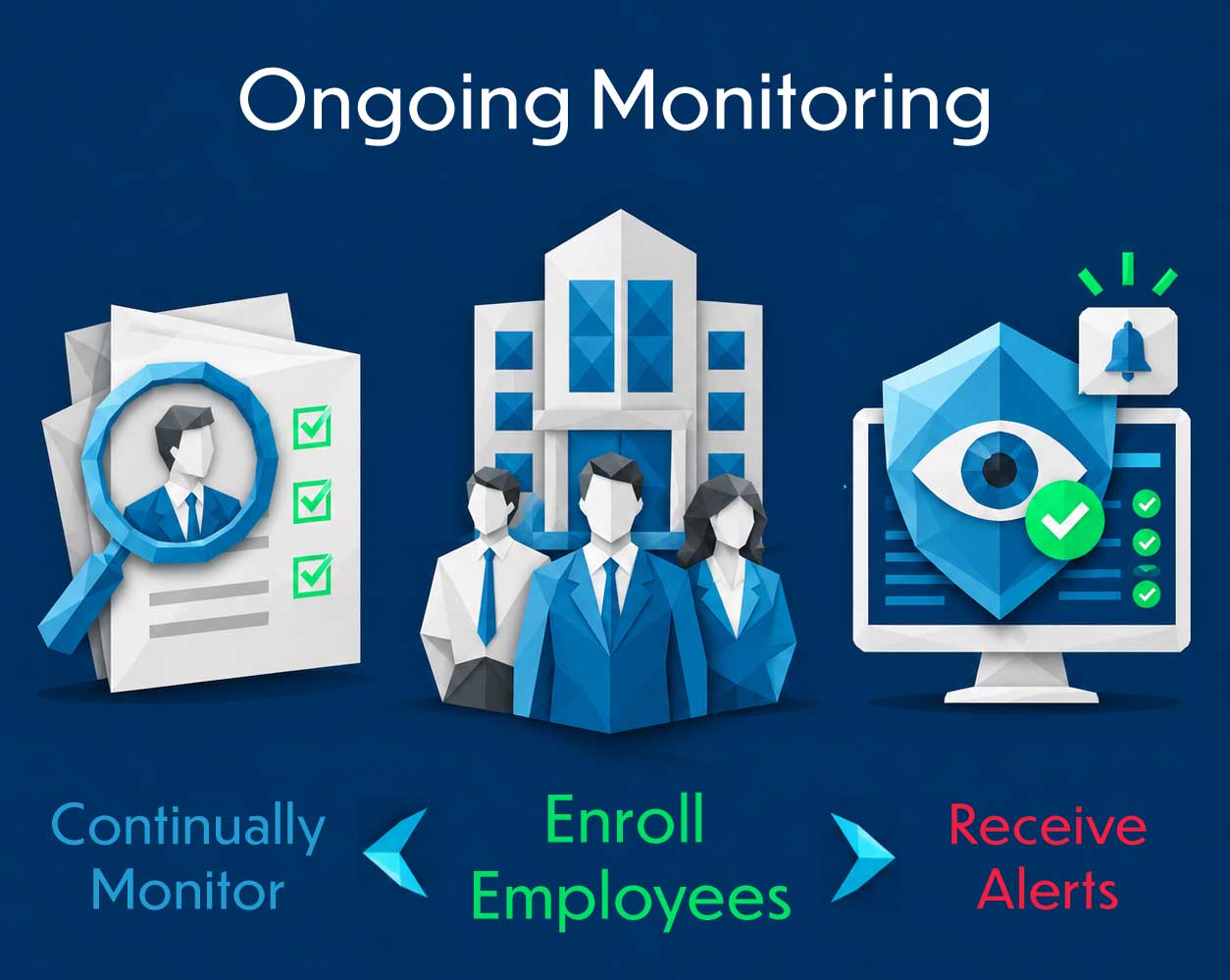
Enroll Employees
Identify the employees or job categories appropriate for monitoring.
-
Continuously Monitor
Participating employees are monitored for potentially relevant criminal-record activity.
-
Receive Alerts
When potentially reportable activity is identified, your organization receives an alert.
-
Review & Respond
Verify the information, evaluate job relevance and follow your established review and compliance process.
Extend Screening Confidence Beyond the Date of Hire
Your employees, responsibilities and risks can change after hiring. Learn how SimpliVerified Ongoing Criminal Monitoring can become part of a thoughtful, compliance-minded workforce screening strategy.