
Hiring
Drug Testing
Employment Screening


The national rent delinquency rate reached 11.09% in May 2026, signaling a high-risk environment where one bad placement can cost a landlord up to $30,000. You've likely felt the pressure of rising rental fraud and the sophisticated tactics of "tenant jumpers" who know exactly how to game the system. Mastering how to spot red flags on a rental application is your best defense against these professional risks. It's about moving beyond gut feelings to a process rooted in data and rigorous verification.
At SimpliVerified, we believe that thorough screening should be a source of confidence rather than a bureaucratic burden. This guide will help you identify high-risk applicants through data-driven insights and behavioral warning signs to protect your property investment. We'll provide a clear checklist of what to look for, explain how to verify income accurately, and clarify which red flags are legally actionable in the current regulatory climate. You'll walk away with the tools to reduce late payments and maintain a more secure rental portfolio.
A rental red flag is more than just a low credit score. It's any inconsistency in an applicant's story that suggests financial instability or behavioral risk. Understanding how to spot red flags on a rental application protects your property and your peace of mind. In 2026, landlords in Draper face a complex regulatory environment where "gut feelings" are a legal liability. Relying on intuition instead of data can lead to unintentional bias or Fair Housing violations. Modern screening is about objective validation and factual evidence.
The rental landscape has shifted significantly. With national rent delinquency reaching 11.09% in May 2026, the margin for error is razor-thin. Sophisticated application fraud is rising. This makes it harder to distinguish a reliable tenant from a professional "jumper" who knows how to exploit the system. Adopting a preventative screening mindset isn't just a precaution; it's a critical cost-saving measure for property owners. By validating information early, you eliminate the friction of future disputes.
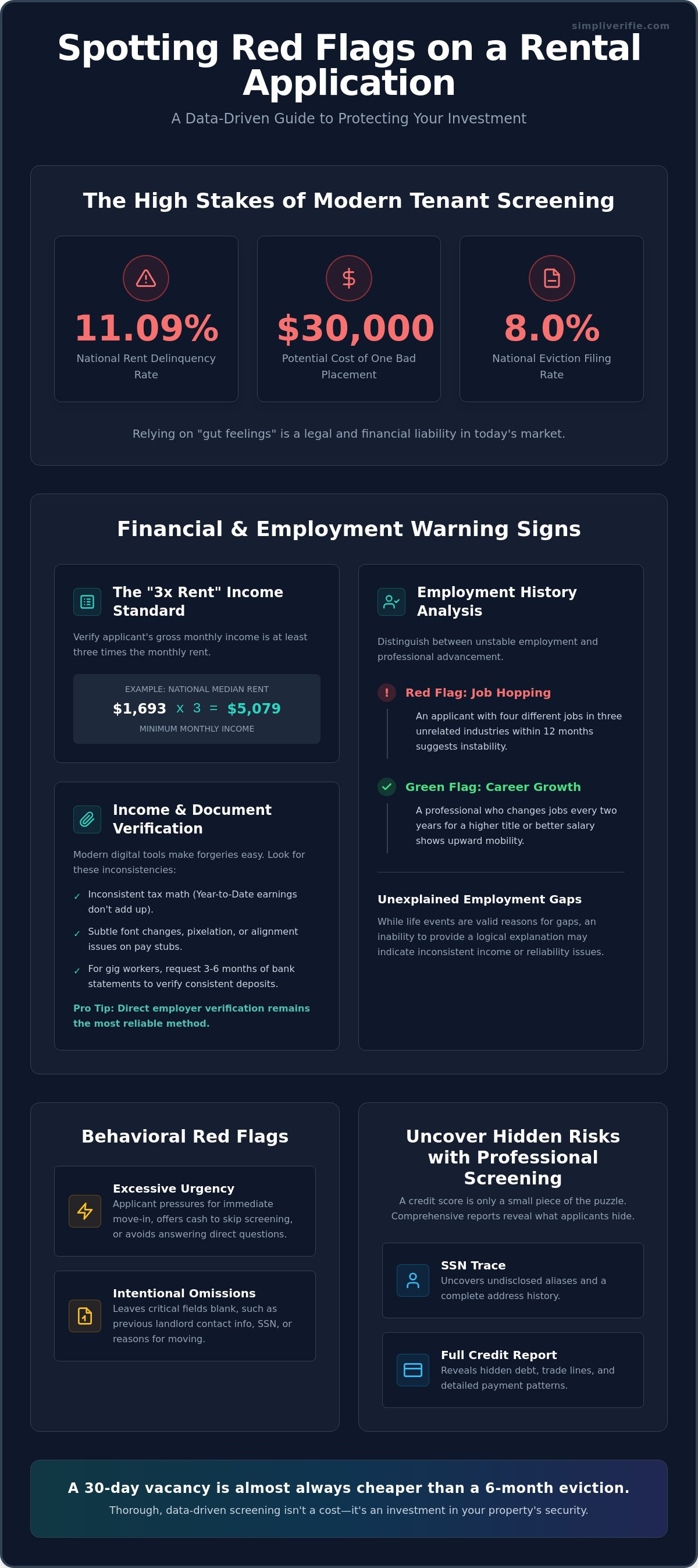
Placing a high-risk tenant can be a devastating financial mistake. Industry data shows a problematic tenant can cost a landlord between $5,000 and $30,000. These figures include legal fees, lost rent, and the average turnover cost of $3,872. With a national eviction filing rate of 8.0%, the risks are tangible. Beyond the numbers, you'll face hidden costs like property damage and the immense administrative time required to regain possession. It's almost always cheaper to endure a 30-day vacancy while waiting for a qualified applicant than to endure a six-month eviction process.
Traditional paper-based applications are no longer sufficient. Modern digital tools allow applicants to easily forge pay stubs or alter bank statements. This makes the tenant screening process more demanding than ever. For landlords and property management businesses in Draper, UT, professional verification is the only way to ensure data integrity. Professional screening goes beyond what a person self-reports. It uncovers the truth through criminal background checks and direct employment verification. Knowing how to spot red flags on a rental application through technology removes the guesswork and ensures you stay compliant with local housing laws.
Financial stability is the backbone of a successful tenancy. The "3x rent" income rule remains the industry gold standard for a reason. With the national median rent reaching $1,693 in early 2026, an applicant should ideally earn at least $5,079 monthly to handle housing costs alongside other life expenses. If an applicant's self-reported income seems "too good to be true" without supporting documentation, it's a primary signal for deeper investigation. Understanding how to spot red flags on a rental application begins with a meticulous review of these numbers.
Unexplained employment gaps are another significant concern. While life events like education or family care are valid, a candidate who can't provide a logical explanation for long periods of unemployment may struggle with long term financial consistency. When reviewing renter applications, look for a clear, chronological history that shows a steady path forward rather than a series of disconnected starts and stops.
Digital forgery has become incredibly sophisticated. You can often spot fake pay stubs by looking for inconsistent tax math; for example, if the year to date earnings don't align with the current pay period's gross. Look for subtle font changes or alignment issues that suggest a document was edited. For gig economy workers, such as those driving for Uber or freelancing, pay stubs might not exist. In these cases, you should request three to six months of bank statements to verify consistent deposits. Reaching out directly to employers remains the most reliable way to confirm current status and earnings. Partnering with an expert for employment verification ensures you're looking at facts rather than fiction.
It's vital to distinguish between upward mobility and unreliable employment patterns. A professional who changes jobs every two years for a higher title or better salary shows career growth. Conversely, an applicant who has held four different jobs in three unrelated industries within 12 months is a major red flag. This pattern often indicates a lack of workplace stability or potential disciplinary issues. The stability ratio is calculated by dividing the total number of years an applicant has been in the workforce by the number of unique employers they've had during that same period. High turnover in an applicant's history often correlates with high turnover in their housing. Knowing how to spot red flags on a rental application means prioritizing applicants who demonstrate a commitment to their professional roles.
While financial data provides an objective baseline, behavioral cues offer a critical perspective on potential risk. Learning how to spot red flags on a rental application involves paying close attention to how an applicant interacts with your professional process. Identity fraud has reached new heights in 2026, making it essential to look beyond the surface of self-reported data. If an applicant provides a spoken narrative that contradicts their written record, they may be attempting to obscure past legal or financial issues. A refusal to pay the application or screening fee upfront is another immediate warning sign. This often indicates either a lack of liquid funds or a fear of what a professional background check will reveal.
Incomplete applications are rarely an accident. Missing Social Security numbers, omitted previous addresses, or blank reference sections are often intentional tactics used to hide a history of evictions or criminal activity. When you're Reviewing Renter Applications, these gaps should be treated as active attempts to bypass your screening criteria. A high-quality applicant understands the necessity of transparency and will provide all requested information to secure a home.
Applicants who insist on moving in "tonight" or "immediately" should trigger immediate scrutiny. Scammers frequently use manufactured urgency to pressure landlords into skipping standard protocols. They hope that by rushing the timeline, you'll feel forced to bypass a thorough background check. In a market where eviction filings remain a persistent reality, this extreme haste is often a sign of a pending legal removal from another property. You can protect your investment by strictly adhering to your established timeline. A qualified tenant will respect your need for a diligent and methodical review process.
Verifying rental history is a cornerstone of identifying behavioral risk. However, you must be wary of references that sound rehearsed or overly vague. It's a common tactic for high-risk applicants to provide the contact information of a friend or relative instead of a genuine property manager. To counter this, you can perform a civil records search to cross-reference the name on the application with the actual property owner of record. This extra step ensures that the feedback you're receiving is authentic and unbiased. Mastering how to spot red flags on a rental application means verifying the source of the information as carefully as the information itself.
While behavioral cues and financial self-reporting provide a baseline, professional screening reports serve as the final layer of defense for your property. These reports convert vague suspicions into actionable data. Learning how to spot red flags on a rental application requires moving beyond the surface level of a simple credit score. You must examine the raw data that reveals an applicant's true financial habits and legal history. This objective verification removes the emotional friction from the decision making process and ensures your selection aligns with your risk tolerance.
A critical component of this process is the Social Security Number (SSN) trace. This search uncovers undisclosed aliases and previous addresses that an applicant might have intentionally omitted to hide a troubled past. In 2026, with identity fraud becoming more sophisticated, cross referencing these hidden details is mandatory for maintaining the integrity of your tenant pool. When you uncover an address not listed on the application, you've found a primary entry point for deeper investigation into potential undisclosed evictions or criminal records.
Credit scores only tell half the story. You should look closely at the "trade lines" to see which specific accounts the applicant prioritizes. Collections from utility companies or previous landlords are major red flags that suggest a history of prioritizing discretionary spending over essential housing costs. Additionally, a high debt-to-income ratio is a risk even if the score is technically "good," as it leaves the tenant with no financial cushion for emergencies. Recent late payments within the last 12 months serve as a much stronger predictor of future delinquency than a low score resulting from a medical debt five years ago. Understanding these nuances is essential for screening tenants in Draper effectively.
Draper, UT continues to attract residents from across the country, making multi-state searches mandatory. A local search might miss a significant record from just one state over. When reviewing criminal records, it's vital to distinguish between minor infractions and property related risks, such as arson or distribution. Similarly, you shouldn't ignore "dismissed" eviction filings. While they didn't result in a final judgment, they indicate the applicant reached the point of legal action for non-payment or lease violations. You must also handle sex offender registry searches with a focus on compliance and safety. Using professional tools ensures you identify these hidden risks without violating Fair Housing regulations.
To ensure your screening is both thorough and legally sound, consider how SimpliVerified can streamline your background checks with fast, accurate results.
Managing a property portfolio in Draper requires more than just a sharp eye for detail. It requires a partner who can translate raw data into reliable decisions. SimpliVerified provides that foundation through a commitment to fast, accurate, and FCRA-compliant screening. Once you understand how to spot red flags on a rental application, the next step is implementing a system that validates those findings without increasing your workload. Our tenant screenings remove the administrative burden by handling the complex verification tasks that typically consume your day.
A frictionless experience is essential for both the landlord and the applicant. We recognize that top-tier tenants won't wait through a clunky, multi-day process. Our streamlined platform ensures that you get the answers you need quickly while maintaining a professional image that attracts quality residents. By acting as your strategic partner, SimpliVerified helps you navigate the specific regulatory environment of Draper, UT, ensuring every check aligns with local and federal standards.
We don't rely solely on automated algorithms. Our approach integrates high-speed data retrieval with manual verification of credentials to ensure the highest level of accuracy. This hybrid model is why SimpliVerified is the preferred choice for background check services. Busy property managers benefit from real-time alerts and status updates, allowing you to move from application to lease signing with total confidence in your data. We transform a traditionally slow process into a dynamic advantage for your business.
Identifying a red flag is only half the battle. Acting on that information requires strict adherence to the Fair Credit Reporting Act. SimpliVerified guides you through the complexities of "Adverse Action" notices, ensuring you communicate with applicants legally and professionally. This structured approach provides a robust defense against potential Fair Housing claims. By standardizing your screening criteria through our platform, you ensure that every applicant is treated with the same level of rigorous, objective scrutiny. Knowing how to spot red flags on a rental application is a vital skill, but having a compliant partner to verify them is a strategy for long-term growth. Start your compliant screening process with SimpliVerified today.
Protecting your investment in 2026 requires a shift from intuition to rigorous verification. You've learned that understanding how to spot red flags on a rental application involves more than checking a credit score; it's about identifying behavioral patterns and validating self-reported income against hard data. By slowing down the process and looking for inconsistencies in rental history or employment, you significantly reduce the risk of costly evictions and property damage.
Professional screening acts as your ultimate safeguard. SimpliVerified offers the expertise and tools needed to navigate the complex Draper, UT regulatory landscape with ease. Our FCRA-compliant reporting and nationwide network of 15,000+ collection sites ensure you have the most accurate information at your fingertips. You don't have to manage these risks alone.
Secure your property with SimpliVerified's professional tenant screening today. Take the guesswork out of your next placement and enjoy the peace of mind that comes with a truly qualified tenant.
Financial inconsistencies, specifically income that doesn't meet the "3x rent" threshold, are the most frequent issues landlords encounter. In a market where the national median rent reached $1,693 in early 2026, many applicants struggle to prove the $5,079 monthly gross income required for financial stability. Verifying these figures through professional means is the most reliable way to ensure you're getting the full story rather than a fabricated narrative.
You can legally reject an applicant for employment gaps if stability is one of your documented, non-discriminatory screening criteria. While life events happen, a pattern of unexplained gaps suggests a higher risk of future delinquency. It's essential to ensure your decision is based on a consistent policy applied to all applicants. This consistency helps you remain compliant with Fair Housing standards while protecting your rental income.
Verifying gig economy income requires looking at bank statements and tax records rather than traditional pay stubs. You should request at least three to six months of statements to identify consistent deposit patterns. This approach helps you determine if their monthly earnings are stable enough to cover rent long term without the predictability of a W-2 salary. Direct bank verification is often more reliable than self-reported spreadsheets.
A low credit score isn't always an automatic rejection, but it requires a deeper analysis of specific trade lines. Medical debt or old student loans are typically less concerning than recent collections from utility companies or previous landlords. Understanding how to spot red flags on a rental application involves distinguishing between past financial mistakes and current behavioral risks that could impact your property's cash flow.
If a background check contradicts an applicant's story, you should request written clarification immediately to see if they can explain the discrepancy. Inconsistencies regarding previous addresses or undisclosed aliases are serious warning signs of intentional deception. Learning how to spot red flags on a rental application means recognizing when a narrative fails to align with verified data. When this happens, it's often safer to move on to a more transparent candidate.
You can identify fake references by cross-referencing contact details with public property tax records to confirm the actual owner of the previous rental. Ask the reference detailed questions about the lease dates and the security deposit return process. Friends or relatives acting as "landlords" often fail to provide the specific, professional details that a genuine property manager would have readily available in their records.
The primary legal risks include violating the Fair Credit Reporting Act (FCRA) and facing Fair Housing discrimination claims. Professional screening through SimpliVerified provides a critical layer of protection by ensuring all data is gathered and reported objectively. This mitigates the risk of making "gut feeling" decisions that can lead to expensive legal disputes, regulatory penalties, or unintended bias in your selection process.