Hiring
Drug Testing
Employment Screening

Did you know that substance abuse costs North American businesses over $442 billion annually in lost productivity and healthcare expenses? Despite this, a 2024 industry survey revealed that 62% of HR managers still struggle with inconsistent state laws and sluggish lab turnaround times. Implementing a robust drug and alcohol testing program isn't just a legal checkbox; it's a vital shield for your company's culture and bottom line. You've likely felt the frustration of waiting five days for a result while a top candidate considers another offer. It's exhausting to balance DOT requirements with local mandates while trying to keep your workplace safe.
This guide provides the clarity you need to master workplace screening in 2026. We'll show you how to build a compliant, fast, and reliable testing framework that eliminates friction. You'll learn how to slash hiring delays by 30%, maintain full FCRA compliance, and significantly reduce liability through modern, automated processes. We're moving beyond the stress of manual tracking to a future of total peace of mind.
By 2026, the most resilient organizations in Utah will treat drug and alcohol testing as a cornerstone of their risk management framework rather than a simple compliance checkbox. It's a proactive strategy that protects both human capital and financial stability. Modern screening isn't about surveillance; it's about creating a predictable environment where excellence can thrive without the interference of impairment. Companies that prioritize this see 10% lower insurance premiums on average because they've effectively lowered their risk profile through consistent monitoring.
A drug-free workplace impacts the bottom line and internal culture simultaneously. When 75% of employees report feeling more secure in a tested environment, retention rates naturally stabilize. It's about removing the friction caused by substance misuse. High-performance corporate cultures in Draper now integrate these checks into holistic health programs, ensuring every team member is physically and mentally ready to perform. This shift toward wellness-oriented screening transforms a bureaucratic process into a tool for long-term organizational health.
The financial logic behind screening is undeniable. A single workplace accident can cost a business upwards of $40,000 in direct expenses, including medical bills and legal fees. Compare this to a recurring screening program that costs less than $100 per employee annually. The ROI is immediate. Data shows that consistent drug and alcohol testing reduces absenteeism by 20% in labor-intensive sectors like manufacturing and logistics. Management gains total peace of mind knowing their stakeholders' interests are shielded from avoidable litigation and the high costs of employee turnover.
Safety-sensitive roles, like heavy machinery operators or commercial drivers, carry unique risks that demand rigorous oversight. A single error behind the wheel of a 40-ton truck can be catastrophic for the company and the community. However, desk roles also benefit from a baseline 5-panel test. Various drug testing methods allow employers to tailor their approach based on the specific needs of each position. This creates a culture of integrity where every employee, regardless of their title, adheres to the same high standards of professional conduct.
Implementing a robust screening program is a strategic investment in the company's future. These programs don't just stop accidents; they build a foundation of trust between the employer and the workforce. A standard 5-panel test typically screens for amphetamines, cocaine, marijuana, opiates, and phencyclidine. While some view this as basic, it serves as a powerful deterrent. It's the first line of defense in maintaining workplace sobriety. In Draper's growing tech and industrial hubs, this baseline verification ensures that technical precision isn't compromised by substance misuse. It's a simple, fast, and effective way to uphold company values while ensuring everyone returns home safely at the end of the day.
Employers in Draper face a variety of choices when selecting a screening protocol. The 5-panel test remains the foundational tool for most businesses. It targets the five most common substance classes: THC, cocaine, opiates, phencyclidine (PCP), and amphetamines. For 72% of general labor roles, this provides sufficient risk mitigation. However, the 10-panel test is rapidly becoming the benchmark for corporate environments. It expands the search to include benzodiazepines, barbiturates, methadone, and propoxyphene. This wider safety net is essential for office-based roles where cognitive impairment creates significant professional liability.
Compliance is non-negotiable for regulated sectors. If you manage a fleet or safety-sensitive team, you've got to follow the DOT drug and alcohol testing guidelines. These federal standards ensure that your testing process withstands legal scrutiny and keeps the public safe. Alcohol testing also plays a vital role here. While a breathalyzer gives an immediate snapshot of current impairment, an EtG urine test can detect alcohol consumption for up to 80 hours after the last drink. This makes it an essential tool for post-accident investigations where timing is critical for establishing facts.
Construction and manufacturing firms in Utah often prioritize the 5-panel plus expanded opiates to address high-risk machinery operations. In contrast, healthcare facilities require 12-panel screenings to monitor for prescription drug misuse among staff. By 2026, regional data suggests that 48% of Draper businesses will add synthetic opioids like fentanyl to their standard panels to combat local trends. Customizing your panel ensures you aren't testing for irrelevant substances while missing modern threats. This targeted approach provides true peace of mind for your safety officers.
Urine testing is the most common method because it's cost-effective and offers a reliable 3 to 5-day detection window for most substances. It's the standard for 94% of pre-employment screenings in the region. Hair follicle testing offers a much longer look back, typically 90 days, which is ideal for high-security clearances or executive hires. For "reasonable suspicion" cases on the job site, oral fluid testing is the best choice. It detects usage within the last 24 to 48 hours and provides immediate collection, allowing for fast, on-site decision-making without the need for a private bathroom facility.
Choosing the right method doesn't have to be a complex or stressful task. You can simplify your screening process by using an automated platform that handles the logistics and compliance for you. This proactive approach transforms a bureaucratic hurdle into a fast, positive experience for both your company and your candidates.
Effective drug and alcohol testing relies on choosing the method that matches your specific risk profile. By 2026, more companies are moving away from one-size-fits-all solutions in favor of data-driven panels. This strategy reduces costs while maximizing the integrity of your workplace. When you align your testing methods with industry standards, you protect your culture and your bottom line simultaneously.
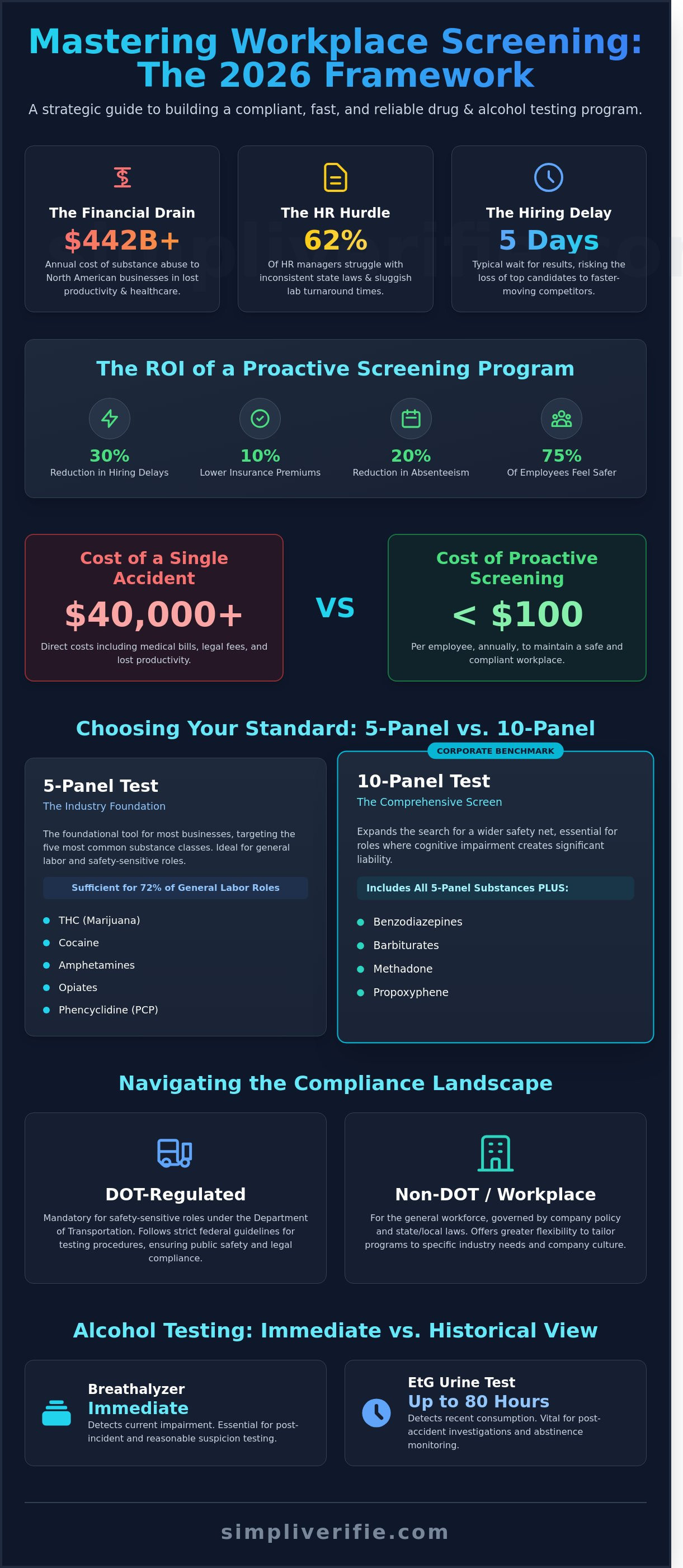
Federal law dictates the path for safety-sensitive roles. If you're hiring CDL drivers or pilots in Draper, you're bound by the Department of Transportation (DOT) standards. These aren't suggestions; they're rigid mandates. Conversely, non-regulated businesses often implement voluntary programs to boost workplace safety. While voluntary, these still require a formal written policy to remain legally defensible. The DOT Office of Drug & Alcohol Policy & Compliance provides the baseline for these strict protocols. This ensures every test follows a chain of custody that holds up under scrutiny.
The Medical Review Officer (MRO) acts as your primary shield during drug and alcohol testing. These licensed physicians review lab results before they reach your HR department. If a test returns a positive result, the MRO contacts the candidate to determine if a legitimate prescription exists. This verification step is vital. It prevents you from making hiring decisions based on legal medication use, which protects your company from costly discrimination lawsuits.
Looking toward 2026, the conflict between federal prohibition and state-level cannabis legalization will continue to challenge employers. For DOT-regulated industries, the rule is clear: federal law overrides state law. Marijuana remains a Schedule I substance at the federal level. Even if a driver has a medical card or uses recreational products legal in other states, a positive test triggers an immediate violation. Non-DOT employers in Utah have more flexibility but must update their handbooks to reflect their specific stance on off-duty use.
The DOT process follows a specific, five-step sequence. It begins with a federal Custody and Control Form (CCF) at a certified collection site. A SAMHSA-certified laboratory then performs the initial screen and confirmatory testing. Since January 6, 2020, all FMCSA violations must be recorded in the national Clearinghouse. This database prevents drivers from jumping to a new company after a failed test. Failure to report these results or check the database can result in fines of $16,477 per violation for transportation companies.
Utah Code 34-38-1 provides a safe harbor for Draper employers who conduct drug and alcohol testing in good faith. To qualify for this protection, you must maintain a written policy and apply it consistently across your workforce. You also need to navigate the Fair Credit Reporting Act (FCRA). If a third-party lab provides the results, you must follow the adverse action process. This means giving the candidate a copy of the report and a summary of their rights before you rescind a job offer. This transparency keeps your screening process compliant and reduces your litigation risk.
Establishing a compliant screening program requires more than just finding a local lab. It requires a structured, five-step framework that ensures legal safety and operational efficiency. By following a proven process, you turn a complex regulatory requirement into a simple, repeatable workflow that protects your workplace culture.
Digital tools have transformed the screening experience. Using an electronic Chain of Custody (eCCF) reduces clerical errors by 25% compared to traditional paper forms. You'll gain real-time visibility into the candidate's journey through our dashboard. You can see the exact moment they check into a clinic. Mobile-friendly scheduling also reduces candidate friction. Most applicants now complete their registration in under 120 seconds using their mobile devices. This speed creates a positive, professional first impression of your brand.
Random testing programs must be statistically valid to stand up in court. Use automated selection tools to ensure every employee has an equal chance of being picked. When an incident occurs, the first 2 hours are critical for accurate drug and alcohol testing results. You need a partner that provides 24/7 access to collection sites to handle emergencies. This immediate response is vital for OSHA 1904.35 compliance and helps maintain a safe environment for your entire team. Our platform provides the tools you need for seamless screening management and total peace of mind.
Draper's business community is expanding rapidly, and with that growth comes the need for a safety partner that combines local insight with massive scale. SimpliVerified provides Draper employers with direct access to a network of over 15,000 nationwide collection sites. This infrastructure ensures that whether you're hiring a local technician in South Mountain or a remote executive in another state, the testing experience remains consistent, professional, and compliant. We don't just facilitate tests; we manage a comprehensive safety ecosystem that meets SAMHSA-certified laboratory standards for every single sample collected.
Our "Simplicity" promise isn't just a marketing slogan. It's an operational reality driven by advanced technology integration. We've built a platform that eliminates the manual data entry and fragmented communication that typically plague HR departments. By automating the scheduling and reporting process, we reduce administrative labor by an average of 40% for our partner companies. This tech-first approach allows your team to focus on talent acquisition while we handle the logistical complexities of drug and alcohol testing and compliance tracking.
Accuracy is the cornerstone of our service. Every result we deliver undergoes rigorous verification by a Medical Review Officer (MRO). This step is vital because it ensures that 100% of non-negative results are scrutinized for legitimate prescription use before they ever reach your inbox. This MRO-led process protects your organization from wrongful termination claims and legal disputes. In a landscape where state laws regarding substance use are constantly shifting, having results that stand up to the highest levels of scrutiny provides a level of security that generic lab services simply cannot match.
We transform complex laboratory data into clear, actionable hiring decisions. You won't have to decipher confusing toxicological reports or worry about missing a regulatory deadline. SimpliVerified acts as a single-source provider, consolidating your background checks and drug screens into one unified dashboard. This integration provides total visibility into your candidate's progress. As we move through 2026, we recognize that technology must be paired with human expertise. That's why every Draper client is assigned a dedicated account manager. You'll have a direct line to a professional who understands your specific industry requirements, rather than a generic call center queue.
Our onboarding process is designed for speed and efficiency. We can take your organization from initial account setup to your first scheduled test in less than 24 hours. We've removed the barriers to entry by offering a flexible pricing model that favors the client. Our transactional billing ensures you aren't locked into rigid, expensive contracts that don't fit your actual needs. You pay for the tests you conduct, allowing your budget to scale naturally with your hiring volume. This transparency is why 95% of our clients report higher satisfaction compared to traditional lab vendors.
If you're ready to modernize your safety protocols and reduce your hiring friction, our team is ready to assist. Protect your workplace with SimpliVerified’s drug testing solutions today.
Workplace safety isn't a static goal; it's a moving target that requires constant vigilance and precise data. By 2026, the distinction between standard 5-panel screens and comprehensive 10-panel options will define how top-tier organizations mitigate risk. Staying compliant with DOT and Non-DOT regulations ensures your business avoids costly legal pitfalls while protecting your team's integrity. Effective drug and alcohol testing shouldn't be a source of stress for your HR department. It's about creating a culture where safety is automated and peace of mind is the standard. You need a partner that turns complex screening into a seamless workflow.
SimpliVerified provides the infrastructure you need to scale safely. You'll gain instant access to a network of 15,000+ nationwide labs. Every result is FCRA-compliant and MRO-verified to guarantee total accuracy. Our system's built to work where you do, offering seamless integration with top HR platforms to save your team hours of manual entry. Don't let outdated processes slow your growth. It's time to transform your screening program into a strategic advantage.
Streamline your hiring with SimpliVerified's compliant drug testing solutions.
Your team's safety is your greatest asset, and we're here to help you protect it with confidence.
In 2026, negative drug test results are typically returned within 24 hours, while non-negative results require 72 hours for laboratory confirmation. Rapid screening technology now delivers instant results for 90% of on-site tests. This speed ensures your hiring process remains fluid and efficient, providing the peace of mind you need to secure top talent quickly without unnecessary delays.
A 5-panel drug test screens for the five most common street drugs, but a 10-panel test adds five additional prescription medications like painkillers and sedatives. Choosing the 10-panel option increases your detection range by 100%. It's a strategic choice for 75% of our clients who prioritize a comprehensive safety culture and want to mitigate risks associated with prescription drug misuse.
Utah employers can legally terminate an employee for a positive marijuana test because the Utah Medical Cannabis Act doesn't require private employers to accommodate use. Utah Code 26-61a-111 protects your right to maintain a drug-free environment. This legal clarity allows you to enforce safety standards without the stress of regulatory ambiguity or the fear of compromising your workplace integrity.
A dilute result occurs when the specimen's creatinine level is below 20 mg/dL, suggesting the sample is too watery for accurate analysis. You'll typically see this in about 2% of tests. Most companies require an immediate retest to ensure the integrity of the drug and alcohol testing process and maintain the high safety standards your organization depends on for daily operations.
DOT drug tests are strictly regulated by the Department of Transportation under 49 CFR Part 40, while standard tests follow internal company policies. DOT rules require a specific 5-panel screen and a federal Chain of Custody form. Standard tests are more flexible, allowing you to customize the panel to fit your specific industry needs while still maintaining a high level of professional rigor.
A professional testing program generally costs between $50 and $85 per test, which includes the collection, lab analysis, and MRO review. Setting up a formal policy might involve a one-time fee of $250. This investment pays off by reducing workplace injury rates by 51% according to industry safety data, making drug and alcohol testing a cost-effective strategy for long-term growth.
An MRO is a licensed physician who acts as an independent expert to verify the accuracy of lab results before they reach you. You need one to provide an essential layer of legal protection and ensure 100% compliance with federal standards. This expert oversight gives you the peace of mind that every hiring decision is based on verified data and protects you from potential litigation.
To find a collection site near Draper, UT, you should look for certified facilities within 5 miles of the I-15 corridor for maximum candidate convenience. SimpliVerified offers access to 4 local labs in the 84020 area. Our digital platform makes the process simple by automating the entire scheduling and reporting workflow, allowing you to focus on your core business goals.